2016 Wisconsin QSO Party

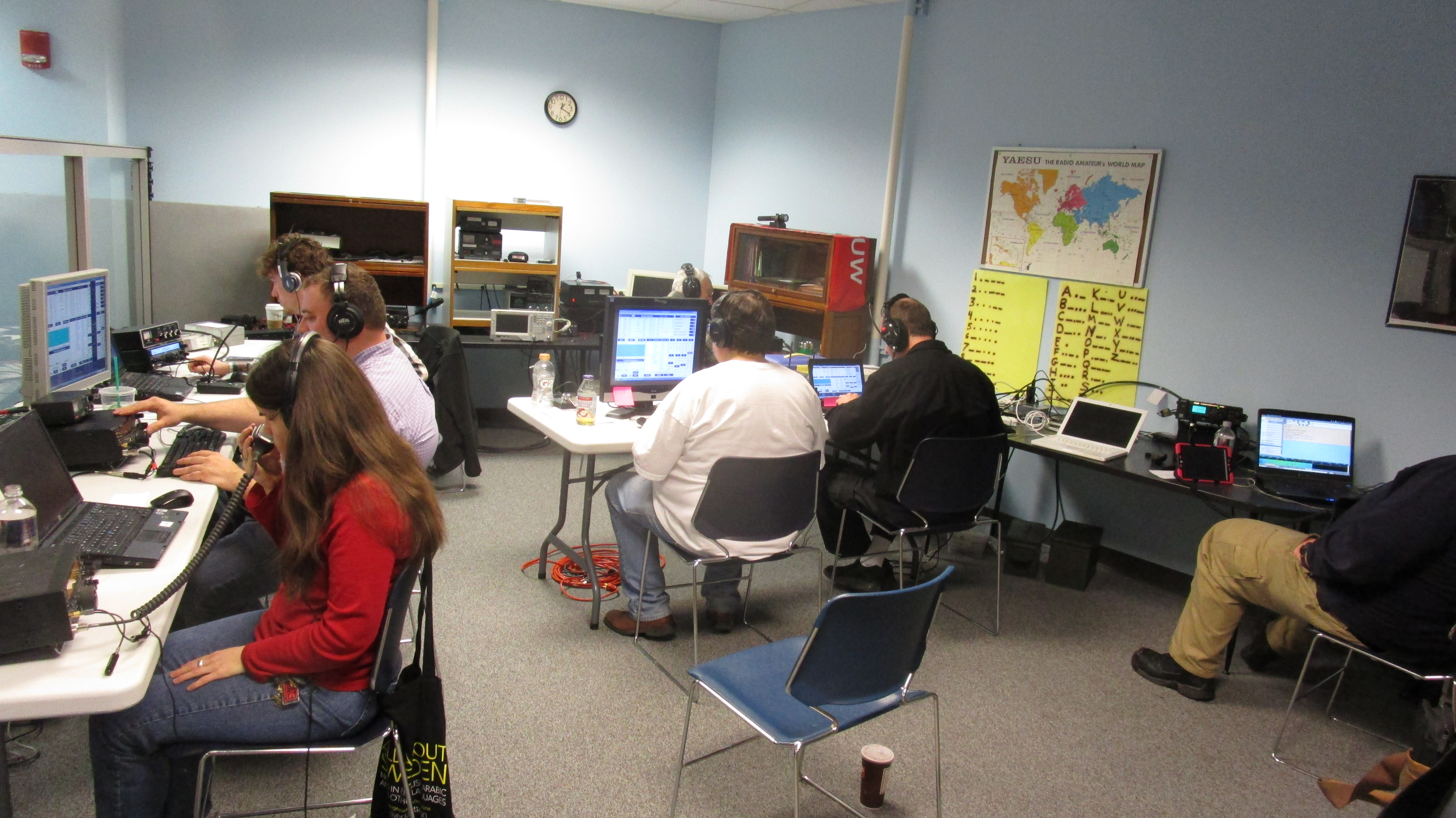
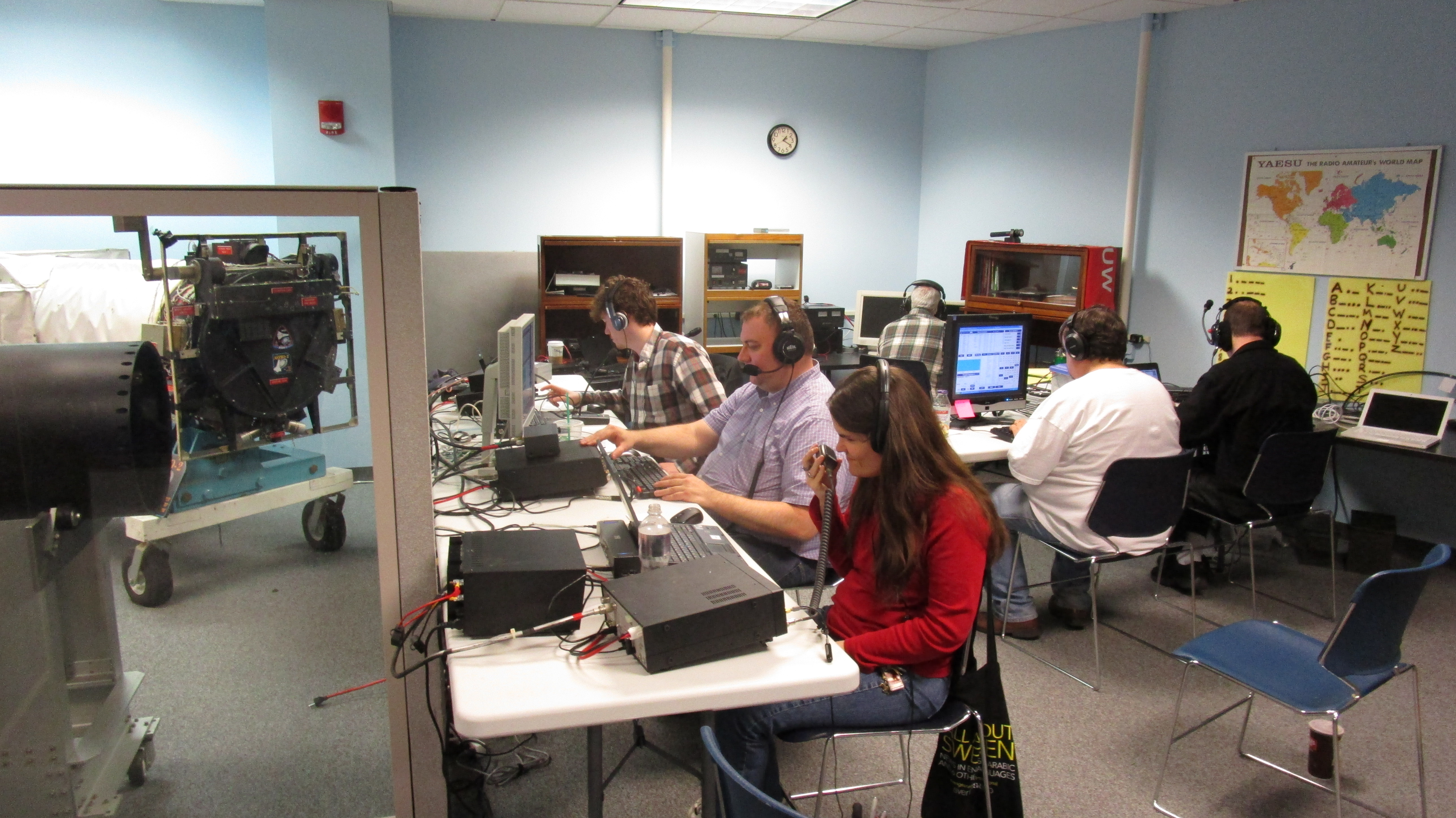
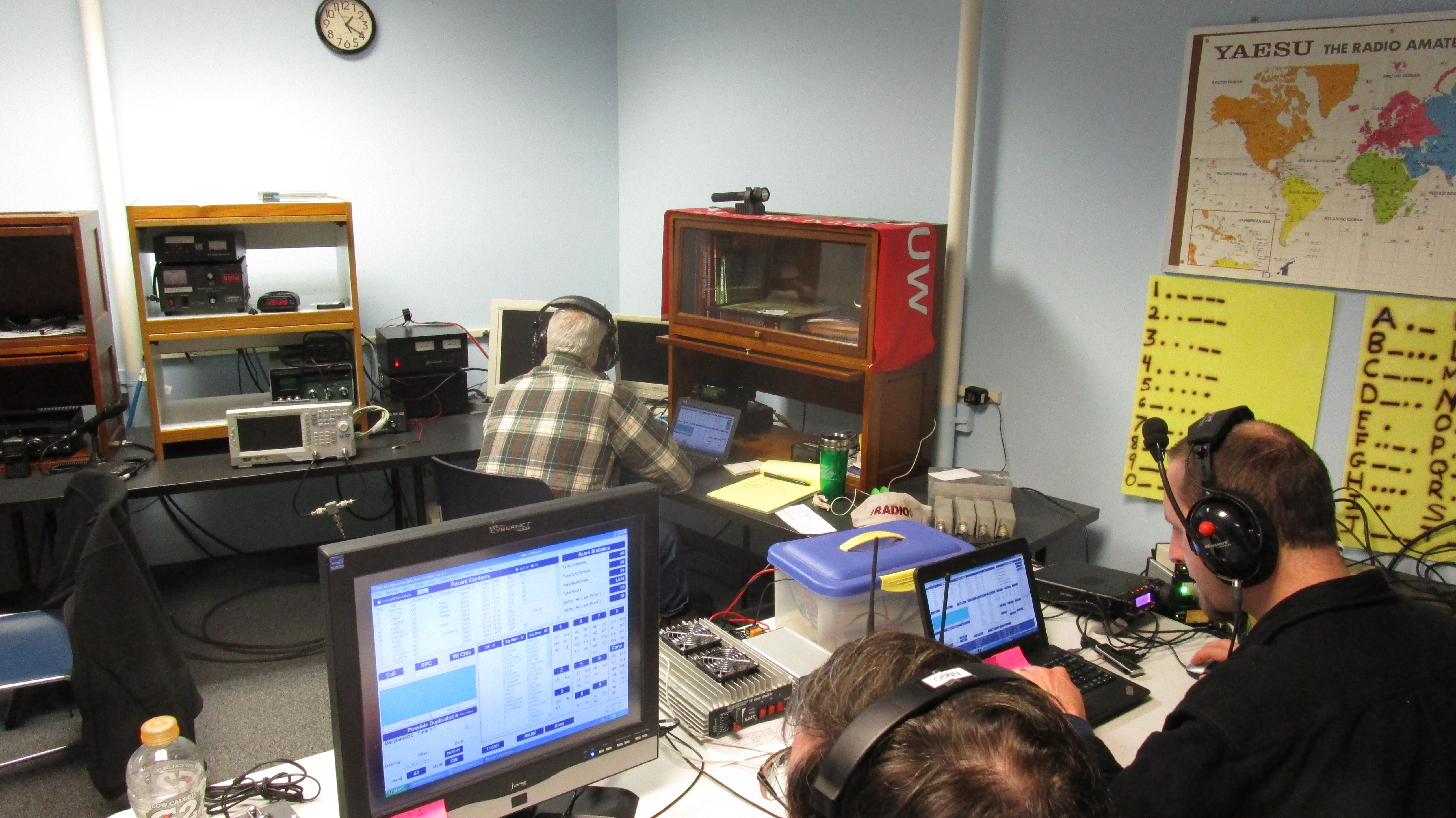
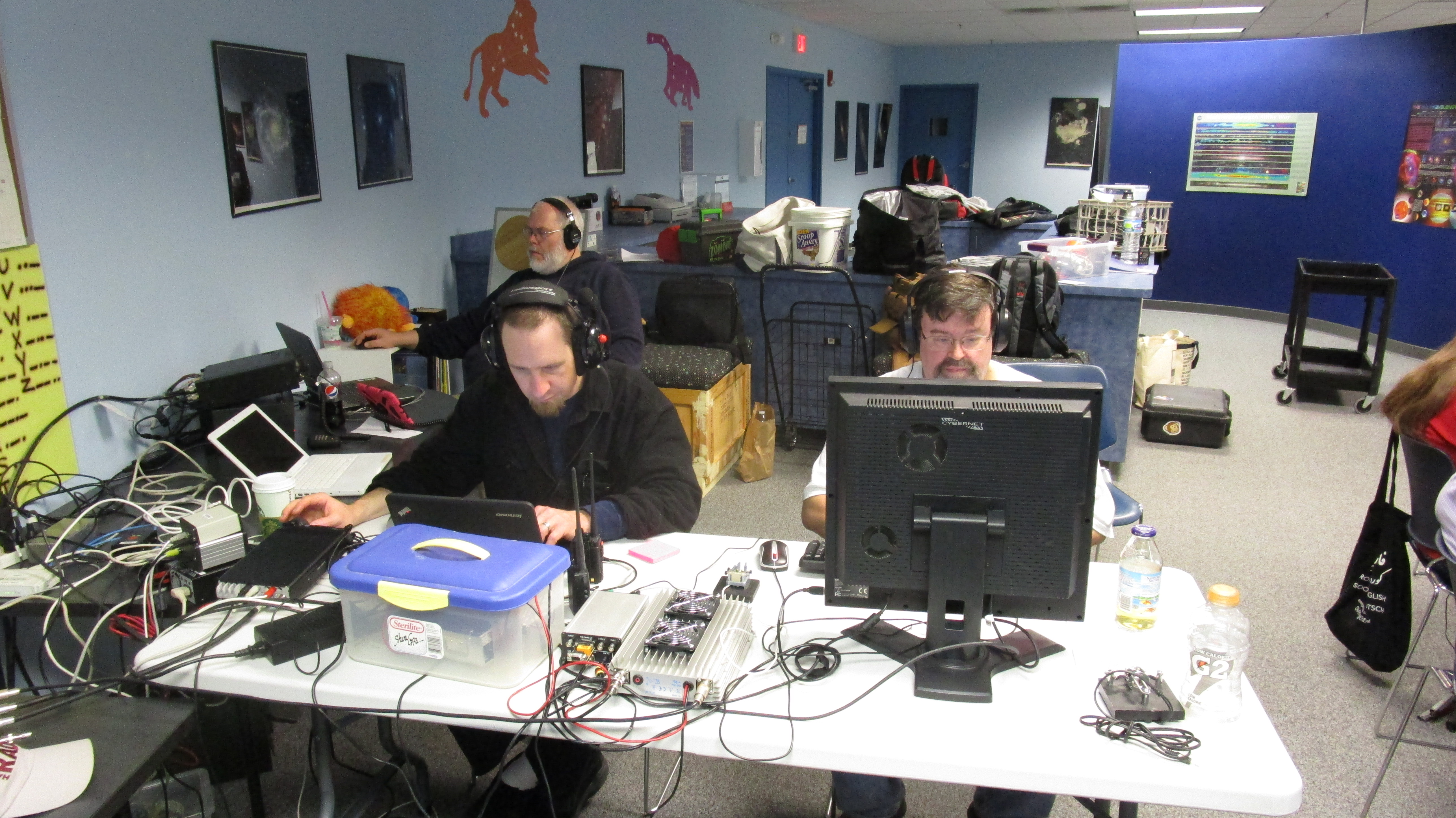
For the 2016 Wisconsin QSO Party, we operated as N9UW from UW Space Place in Madison, WI again this year.

We used two endfed antennas that were a half wavelength on 80 meters, which made them resonant on 10,15,20,40 and 80 meters. Since the quadplexers are only set up for 15,20,40 and 80M, those were the four HF bands that we operated on. We also used the Space Place 2M vertical, so were able to get some local contacts on 2M.

Our operators this year were Barry K8SD, Thomas, AC9BJ, Carlie KD9CZG, Doug ND9Q, Matt NM9O, Andy AC9CB, Mike KD9BDL, Tom W9TDP, Brian KK4HPY and Nathan KC9WHJ. We operated using SSB, FM, CW and digital (psk31) modes. This was a great learning event as some of our operators had limited HF experience previously.

For logging we used the software created by N3FJP.

We made contacts with 46 Wisconsin counties and 43 states/provinces in North America.

Some pictures showing the operators and station setup.

Continue reading “2016 Wisconsin QSO Party”

Capacitors – Now we add letters to the mix

Adding letters to capacitor values isn’t that complicated; it’s just one more little detail to be aware of. The following sums up some basic letter codes for capacitor tolerances:
Some capacitors are defined by a three number code followed by a letter. This letter represents the tolerance of the capacitor, meaning how close the actual value of the capacitor can be expected to be to the indicated value of the capacitor. The tolerances are indicated as follows:
Read B as 0.10 percent.
Read C as 0.25 percent.
Read D as 0.5 percent.
Read E as 0.5 percent. This is a duplication of a D code.
Read F as 1 percent.
Read G as 2 percent.
Read H as 3 percent.
Read J as 5 percent.
Read K as 10 percent.
Read M as 20 percent.
Read N as 0.05 percent.
Read P as plus 100 percent to minus 0 percent.
Read Z as plus 80 percent to minus 20 percent.

The above was copied from this site, which adds a little bit more info.

Next week, we’ll talk about more naming schemes, and wind up with a couple of links which illustrate just how (unnessarily?) complex this subject can become.

One of the many capacitor numbering schemes

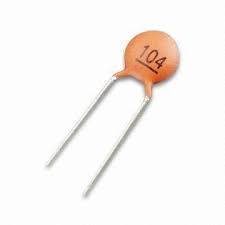
This is a tiny ceramic capacitor.  You can only read the stuff printed on it under high magnification

ceramic sapacitor01

Let’s say that this is the same capacitor, but under high magnification. But what does ‘104’ mean? Is it some kind of model number? Inventory number? Does it mean nothing to anyone but space aliens?

Ceramic capacitor

Nope. It tells you it’s capacitance, in picofrads. The first two digits indicate part of it’s capacitance value. The third digit indicates the number of zeros which follow the first two digits.

Thus, it’s capacitance is 10, followed by four zeros, i.e., 100,000 picofarads (100,000 pF)

You can also just drop the last three zeros and call it 100 nanofarads (100 nF). Both are the same value; they’re just  written differently.

You can find out a bit more here.

And even more, in a straight-to-the-point video, here.

That strange stuff printed on capacitors

This begins a series of posts about stuff which is printed on the outside of capacitors. We’ll deal with some of the schemes for indicating mF, uF, nf, and pF.

For our purposes:

1 mF is also known as
one one-thousandth of a Farad
10 to the minus-3rd power of a Farad
0.001 of a Farad
1 millifarad

1 uF is also known as
one one-millionth of a Farad
10 to the minus-6th power of a Farad
0.000001 of a Farad
1 microfarad

1 nF is also known as
one one-billionth of a Farad
10 to the minus-9th power of a Farad
0.000000001 of a Farad
1 nanofarad

1 pF is also known as
one one-trillionth of a Farad
10 to the minus-12th power of a Farad
0.000000000001 of a Farad
1 picofarad

There are much larger capacitor values in other branches of electronics but we don’t need to deal with that on a ham radio site.

Next, we begin relating the above definitions to the many codes used by capacitor manufacturers.
Meanwhile, there’s more material about similar math notation on Wikipedia.

Appropos of nothing: there are also the mathematical prefixes Zepto- and Yocto-, which are not needed here. They just sound like two long lost Marx brothers. You know, Groucho, Chico, Harpo, Zeppo, Gummo, Zepto, and Yocto.
Baofeng Programming

To those who have Baofeng (gasp!) HT , general-purpose radios:

For dependable, computer-based programming of the Baofeng UV-5R and some of the manufacturer’s other models:

Go to a reputable download site, such as SourceForge

Search for, and download, the file named Chirp_liveCD-6Feb14.exe

Click on this file to expand it  to an .ISO image, then burn this image to a CD (not a DVD)

Connect your computer’s USB jack to your unit, using *only* a patch cable containing an  FTDI chip  (ordinary patch cables will not work).

Reboot your computer from the CD which you just made. Booting will take awhile because the disk has to load the Ubuntu operating system   (a flavor of Linux) into RAM. Meanwhile, you’ll be regaled by a glorious, living color, picture of the UV-5R

Program the Baofeng.

When finished, log out, remove the CD, and restart your computer. You’ll find that the CD has not changed your system at all.

Also, in the Editor’s opinion,  support from the manufacturer is spotty, at best. For best results, go to Baofeng Tech. This site is also a source of dependable FTDI cables. You can also buy one from Amazon. They usually cost about $15-$20, as compared to about $2-$8 for a non-FDI cable.

Disclaimer: The FCC does not recognize Baofeng UV-5R-based HTs  as Ham radios.

Matt, our Webmaster, has an excellent Baofeng Helper page.  It deals with programming the UV-5R without using a computer, and also gives programming data for many repeaters.

Thoughts on Lifetime Licenses and Vanity Callsigns

The following is from Bob, WA9D

I just found this idea suggested online. I am not at all sure how seriously to take it. But in case it might have relevance for you:

  • On the one hand, you probably know, the FCC has done away with the fee for requesting a vanity call sign. (They worked out that it cost them more to process it than they received.)
  • On the other, you may also know, there is under some consideration a move to make your license last as long as you do. Not expiring after 10 years unless you take action. (Unless you expire after 10 years… but is that taking action?) Whether that will happen, whether it would apply to all classes, etc., is unknown.

But putting those together people have pointed out that there might be fewer “desirable” calls available to request: Whoever has the call you would really like might just keep on owning it, whether active as a ham or not. So the suggestion was made, take this with whatever sized grain of salt you might want, that if you anticipate going for a vanity call you might be better off to look for one you like, soon.

I repeat that I have no extra knowledge about what the FCC will do nor about what effect it would have on availability of calls!
Bob …  WA9D

Further info will be welcomed.   –Ed.